The Red Sea is home to one of the most important maritime trade routes in the world, and the Houthis attacks have had far-reaching consequences. The Houthis had initially said they were attacking Israeli and Israel-bound ships in a show of support for Hamas. However, the group’s attacks have targeted a wide variety of merchant tankers. At least 44 countries are connected to vessels attacked by the Houthis and the attacks have disrupted wider international trade.
The Red Sea is home to one of the most important maritime trade routes in the world, and the Houthis attacks have had far-reaching consequences. The Houthis had initially said they were attacking Israeli and Israel-bound ships in a show of support for Hamas. However, the group’s attacks have targeted a wide variety of merchant tankers. At least 44 countries are connected to vessels attacked by the Houthis and the attacks have disrupted wider international trade.
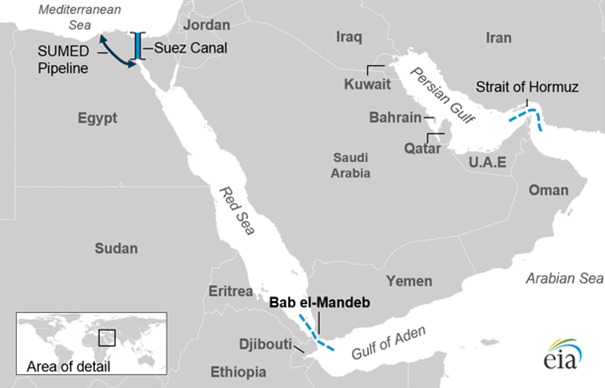
Almost 90 per cent of the oil that flows through the Bab el-Mandeb comes from the Persian Gulf and is destined for Europe and Africa. The other 10 per cent is oil from the Horn of Africa.
Europe stands to lose the most from higher energy prices because of the present disturbances. The Suez Canal route has become crucial since European countries stopped buying Russian oil. Most of these countries have replaced a great deal of the Russian petroleum they had been importing with crude oil and products from the Middle East. The fastest route to Europe from the Middle East is through the Red Sea and the Suez Canal, even though the Suez Canal is unable to accommodate some of the very largest crude oil ships, classified as Very Large Crude Carriers or VLCCs.
 thezeus.net.in
You must be logged in to post a comment.